13 of 13 products
The only question that matters here is whether the mats are cut for your exact car. Everything else is secondary.
Universal mats are trimmed rectangles. They cover the middle of the footwell and leave the sides bare, which is where most of the salt and grit ends up. Worse, a mat that does not lock onto the factory retaining posts can slide forward under the pedals. That is a real hazard and the reason floor mat recalls exist.
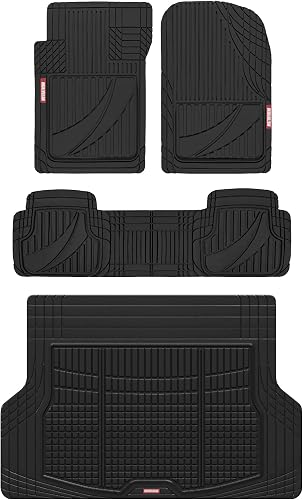
Custom-fit liners are laser scanned per model and year. They run up the sides, hook onto the factory posts, and hold water. If you live somewhere with snow or rain, this is the whole purchase.
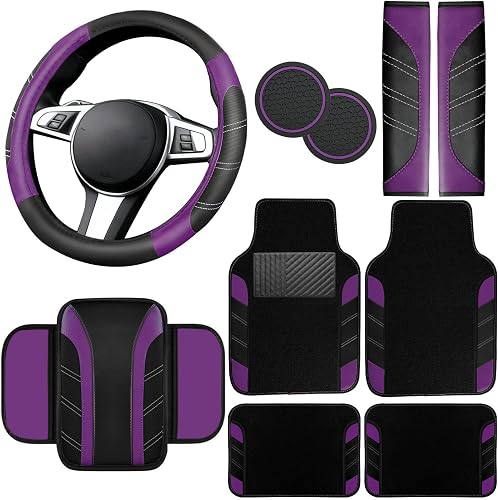
Rubber is heavy, durable, and can smell for the first few weeks in a hot car. TPE is lighter, has almost no odor, and stays flexible in cold weather where cheap rubber goes stiff. Carpeted mats look the best and are the wrong choice if you are buying mats to solve a mess problem.
Most listings say “all weather” regardless. Check for a raised lip on all four sides, at least a centimetre or so. Without it they are just mats.
Model year matters more than model. Manufacturers change footwell shape mid generation, and a 2019 liner often will not sit right in a 2021. Check the listing covers your exact year, and if the car has heated rear seats, a sunroof drain, or a hybrid battery under the floor, check the cargo liner separately.
Rear liners are usually a single piece across the bench. If your car has a raised transmission tunnel, look for one moulded to it rather than a flat sheet bridging the hump.
Buy one if you carry anything wet, dirty or alive. Trunk carpet is glued to the body panel and cannot be lifted out to dry, so a spill there stays there. A liner with a raised edge turns that from a permanent problem into a hose down.
We use cookies to measure how the site is used. Nothing is stored until you choose.